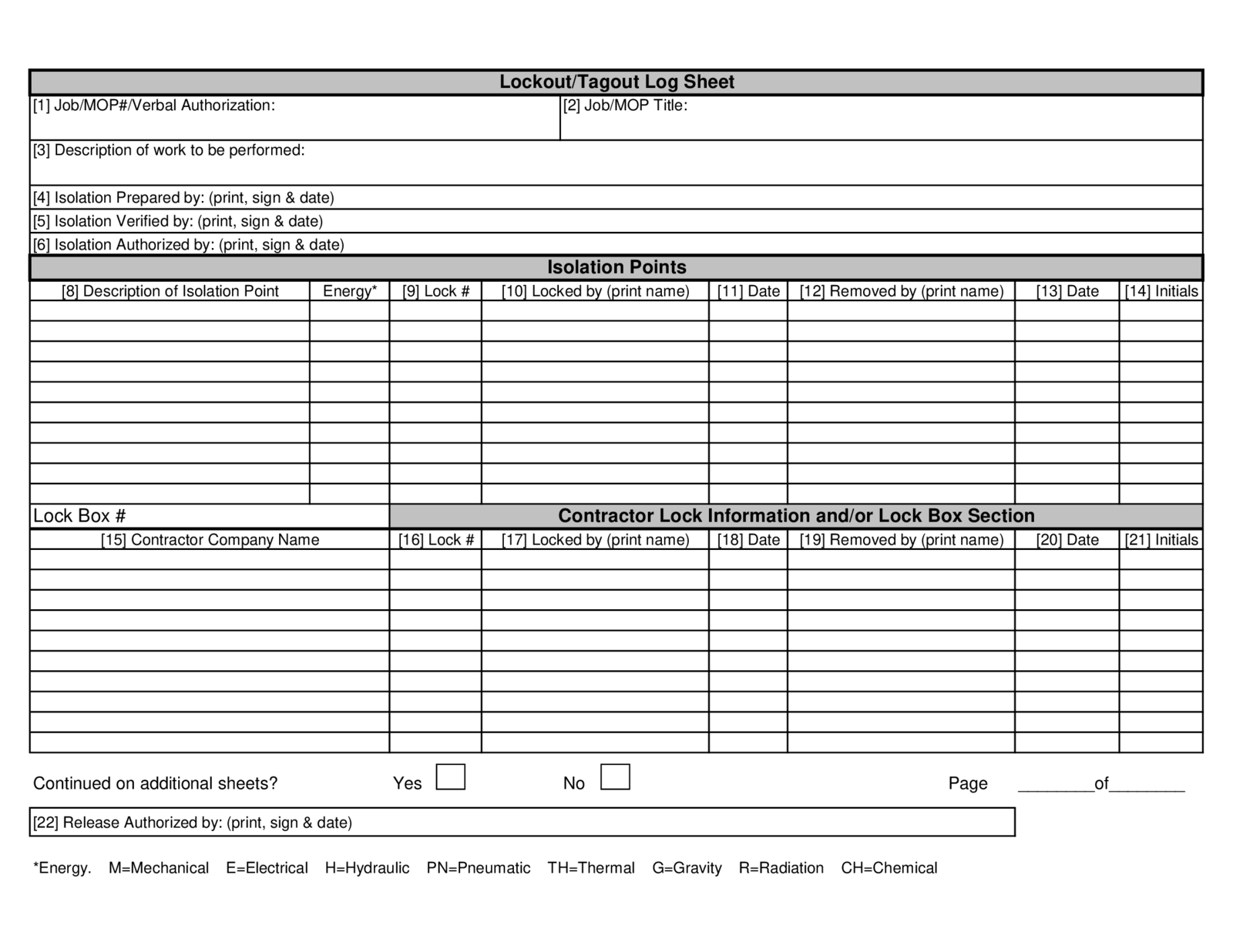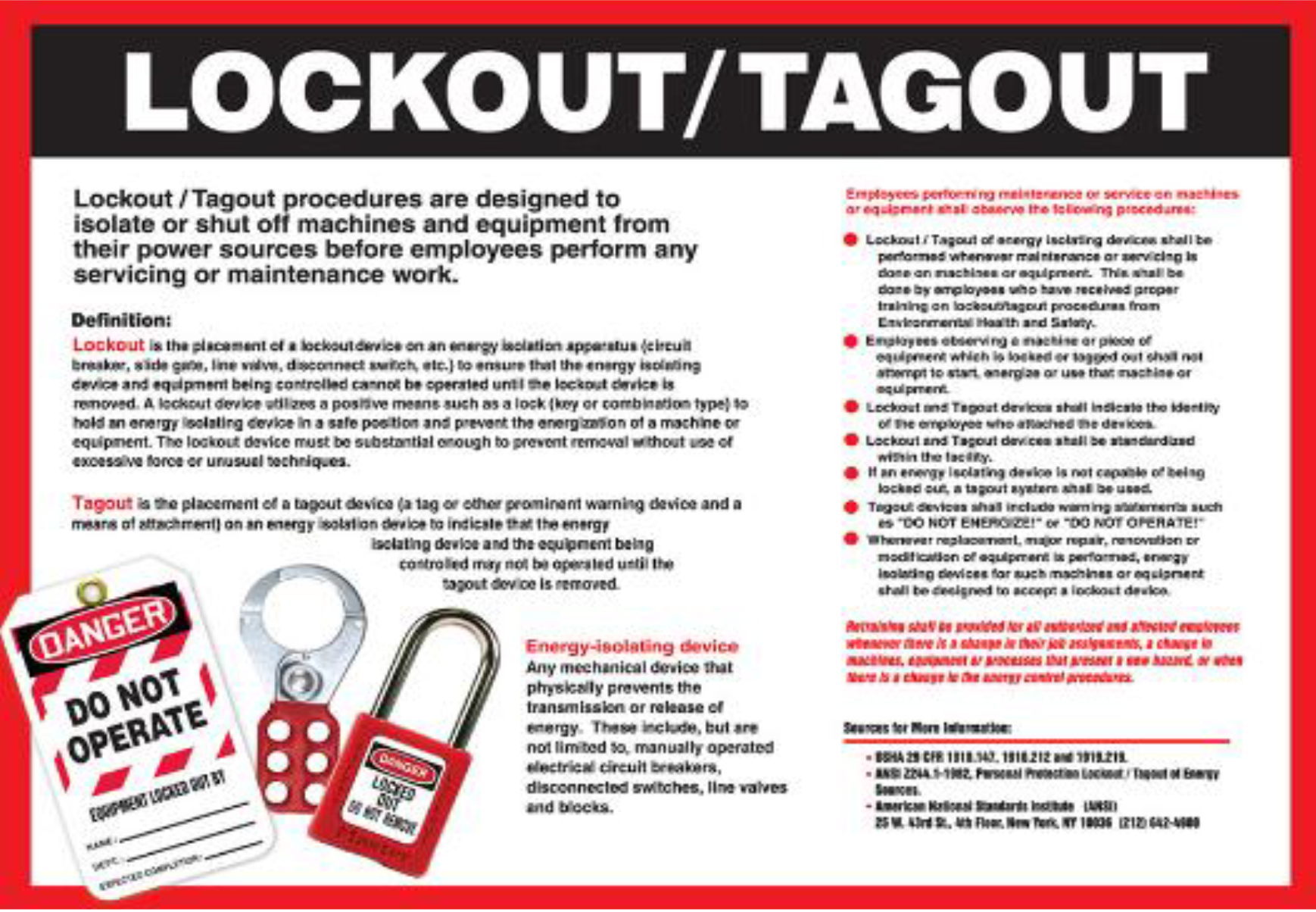
Machines don’t warn you twice. A misaligned guard, a forgotten valve, or a poorly documented step in a written lockout tagout (LOTO) procedure can result in amputation, electrocution, or worse. Yet, in too many facilities, LOTO procedures are treated as compliance checkboxes—generic, outdated, or copied from another site with no real connection to the equipment in use. That’s not safety. That’s risk disguised as paperwork.
The purpose of written lockout tagout procedures isn't just to satisfy OSHA. It’s to create a repeatable, foolproof system that ensures every worker can isolate energy sources confidently—every single time. When done right, these documents become the backbone of a safety culture. When done poorly, they become liability artifacts.
Let’s break down what makes written LOTO procedures effective, enforceable, and truly protective.
Why Written LOTO Procedures Are Non-Negotiable
OSHA’s 29 CFR 1910.147 requires written procedures for any equipment that poses hazardous energy risks during servicing or maintenance. But compliance is only the baseline. The real value lies in clarity and consistency.
Consider this: a maintenance technician is tasked with clearing a jam in a conveyor system. Without a step-by-step written procedure, they might: - Miss de-energizing a secondary motor - Overlook a hydraulic accumulator under pressure - Fail to verify zero energy state
Each of these oversights can be fatal. A written LOTO procedure eliminates ambiguity by detailing every action required—from preparation to verification to re-energization.
These documents also serve as training tools. New technicians learn correct isolation methods by following standardized steps. Supervisors use them to audit compliance. Safety managers reference them during incident investigations.
In short, a written LOTO procedure isn’t just about locking a switch. It’s about creating a documented safety chain that holds everyone accountable.
Key Elements of an Effective Written LOTO Procedure
A high-quality written procedure does more than list steps. It anticipates human error, addresses equipment complexity, and ensures verification at every stage. Here are the critical components:
1. Equipment Identification Clearly name the machine or system. Include model number, location, and energy types involved (electrical, pneumatic, hydraulic, chemical, etc.). Avoid vague labels like “conveyor belt” — use “Conveyor Line 3B – Packaging Station.”
2. Authorized Employee Responsibilities Define who is trained and authorized to perform the procedure. Include names or job titles if relevant, and clarify roles during group lockout scenarios.
3. Energy Source Inventory List every energy source that must be controlled. For a printing press, this could include: - Main electrical disconnect - Pneumatic lines feeding clamps - Hydraulic pump reservoir - Stored tension in rollers
Each source gets a unique ID tag and lock location.
4. Step-by-Step Shutdown and Isolation Provide chronological instructions:
- Notify affected employees of upcoming maintenance.
- Shut down the machine using the normal stop button.
- Isolate the main power disconnect (located at Panel A-7).
- Close and lock the hydraulic line valve (Valve H5).
- Bleed residual pressure from pneumatic lines via relief port.
Steps must be specific, using real labels and locations—not generic descriptions.
5. Application of Locks and Tags Specify:
- Type of lock (e.g., keyed padlock, combination lock)
- Who applies each lock
- Tag content (e.g., “Do Not Operate – Maintenance in Progress – John Doe, 8:15 AM”)
Tags must include the worker’s name, department, and reason for lockout.
6. Verification of Zero Energy State
This is the most skipped—and most dangerous—step. The procedure must require positive verification: - Test electrical circuits with a multimeter - Manually check for movement after attempting to restart - Confirm pressure gauges read zero
Without verification, the lockout is incomplete.
7. Removal and Re-Energization Detail the sequence for safe restart:
- Ensure all tools are removed
- Confirm all employees are clear
- Remove locks only by the person who applied them
- Notify operations team before re-energizing
Group lockouts require an additional coordination step—often a primary authorized employee overseeing removal.
Common Mistakes That Undermine LOTO Procedures
Even facilities with written procedures fail in execution. Here are the most frequent errors:
✘ Copy-Paste Procedures from Another Site
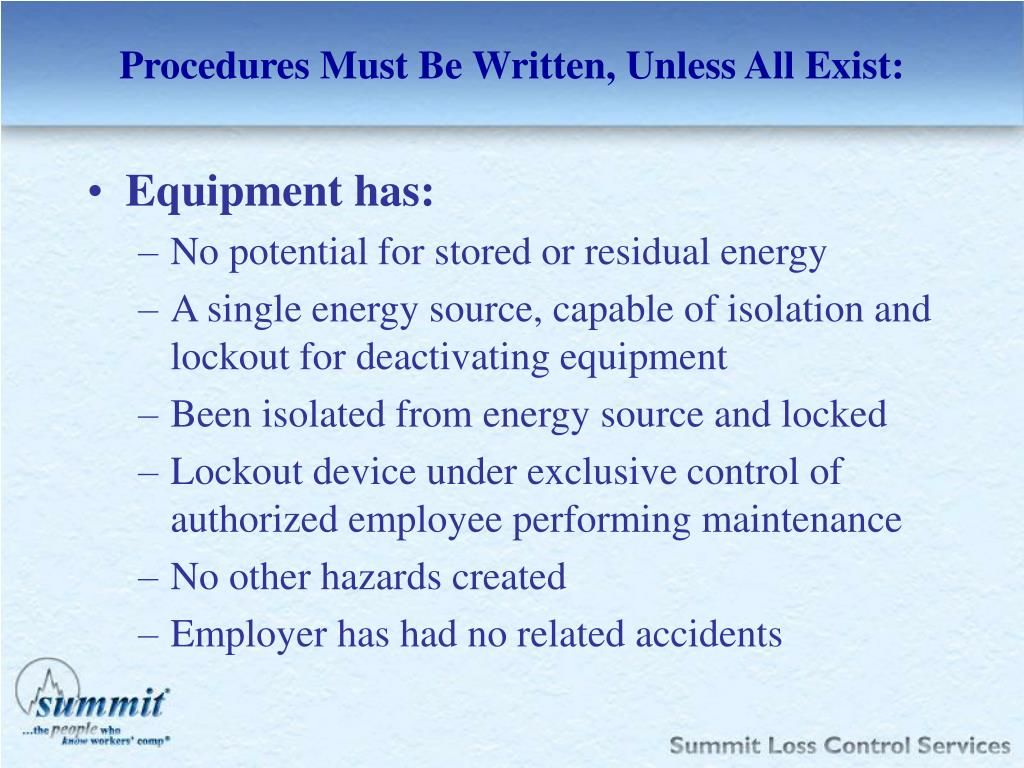
Using a boilerplate LOTO from a different plant ignores equipment variations. A shear press in Facility A may have three energy sources; in Facility B, it might have five. Generic procedures create false confidence.
✘ Failing to Update
After Equipment Modifications A machine retrofit adds a servo motor. The old procedure doesn’t mention it. The next lockout misses that energy source. Procedures must be reviewed and revised after any change—no exceptions.
✘ Skipping Verification Workers assume “if it’s locked, it’s safe.” But stored energy, gravity, or backfeed can still pose danger. Verification isn’t optional—it’s the final proof.
✘ Incomplete Training Just reading the procedure isn’t enough. OSHA requires hands-on training with real equipment, including practice lockouts and emergency scenarios.
✘ Poor Accessibility If the procedure is buried in a binder on a supervisor’s desk, it won’t be used. Digital access via QR codes on machines or mobile apps increases compliance.
Real-World Example: LOTO Procedure for a CNC Machine
Let’s walk through a realistic written LOTO procedure for a CNC milling machine:
Equipment: Haas VF-2 Vertical Mill, Station 5, North Wing Energy Sources: - 480V 3-phase electrical - Compressed air feed (80 psi) - Hydraulic coolant system - Spindle rotational inertia
- Steps:
- Notify production supervisor and affected operators.
- Complete current cycle and press E-Stop.
- Open main disconnect (ID: E-PANEL-05-MAIN) and apply personal lock.
- Close and lock air supply valve (Valve AIR-05B).
- Depressurize hydraulic line via bleed valve; confirm gauge reads 0 psi.
- Engage mechanical brake to prevent spindle drift.
- Apply lockout device to control panel.
- Test for zero energy: attempt restart (fails), check voltage with meter (<2V).
- Hang tag with name, date, and purpose.
Verification: Technician uses multimeter and visually confirms no residual movement.
Removal: After maintenance, technician removes tools, clears work area, removes lock and tag, notifies supervisor, and re-energizes only after confirmation.
This level of detail prevents shortcuts and ensures consistency across shifts.
How to Develop and Maintain Effective Procedures
Creating written LOTO procedures isn’t a one-time project. It’s an ongoing process.
Start with an Energy Control Survey Walk every machine. Map every energy source. Photograph isolation points. Use this data to draft accurate procedures.
Involve Frontline Workers Technicians who maintain equipment daily know where hazards hide. Their input improves clarity and practicality.
Standardize Format Across Facilities Use a consistent template for all procedures. Include headers, numbered steps, diagrams, and signature lines. This reduces confusion and speeds training.
Review Annually—Or After Any Incident Schedule annual audits. More importantly, review procedures after: - A near-miss - A machine modification - A change in personnel
Update documents immediately and retrain affected staff.
Store Procedures Accessibly Options include:
- Digital tablets at each workstation
- QR codes on machine labels linking to PDFs
- Printed binders stored nearby (with revision dates visible)
Outdated or hard-to-find procedures are as bad as having none.
Tools to Streamline LOTO Procedure Management
Managing dozens—or hundreds—of written procedures manually is error-prone. These platforms help maintain accuracy and compliance:
| Tool | Key Feature | Best For |
|---|---|---|
| Lockout Tagout Pro | Drag-and-drop procedure builder with templates | Mid-sized manufacturers |
| Sphera LOTO | Cloud-based, integrates with EHS systems | Enterprises with multiple sites |
| **iAuditor by SafetyCulture | Mobile audits and real-time updates | Facilities using tablets in the field |
| LockoutWorks | Visual flowcharts and equipment mapping | Complex industrial systems |
| EHS Insight | Automated reminders for annual reviews | Companies needing compliance tracking |
These tools reduce administrative burden and ensure procedures stay up to date.
Final Thoughts: Turn Paper Into Protection
A written lockout tagout procedure is only as strong as its weakest link. A missing step, an outdated diagram, or a poorly trained employee can break the chain.
But when built with precision, reviewed with discipline, and used with consistency, these documents do more than check a compliance box. They save lives.
Start by auditing your current procedures. Are they specific? Verified? Accessible? If not, revise them—using real equipment, real steps, and real worker input.
Then train. Then audit. Then repeat.
Safety isn’t a document. It’s a practice. And your written LOTO procedures should reflect that truth every time a lock goes on—and every time it comes off.
Frequently Asked Questions
What must be included in a written lockout tagout procedure? A complete written LOTO procedure includes equipment identification, authorized personnel, energy source list, step-by-step shutdown and isolation, lock and tag application, verification of zero energy, and re-energization steps.
Who is responsible for writing LOTO procedures? Employers are responsible for developing and implementing written procedures, typically with input from safety managers, maintenance supervisors, and authorized employees.
Do all machines need a written LOTO procedure? Yes, if the machine has hazardous energy sources and requires servicing where employees may be exposed to that energy.
Can digital procedures comply with OSHA? Yes, OSHA accepts electronic versions as long as they are accessible to employees and protected from alteration.
How often should LOTO procedures be reviewed? At least annually, and whenever equipment is modified, a near-miss occurs, or a new hazard is identified.
Can one procedure cover multiple machines? Only if the machines are identical in energy sources and isolation methods. Otherwise, each machine needs its own documented procedure.
What happens if a LOTO procedure is not followed? Failure to follow written procedures can lead to severe injuries, OSHA citations, fines, and increased liability in the event of an incident.
FAQ
What should you look for in Written Lockout Tagout Procedures That Actually Work? Focus on relevance, practical value, and how well the solution matches real user intent.
Is Written Lockout Tagout Procedures That Actually Work suitable for beginners? That depends on the workflow, but a clear step-by-step approach usually makes it easier to start.
How do you compare options around Written Lockout Tagout Procedures That Actually Work? Compare features, trust signals, limitations, pricing, and ease of implementation.
What mistakes should you avoid? Avoid generic choices, weak validation, and decisions based only on marketing claims.
What is the next best step? Shortlist the most relevant options, validate them quickly, and refine from real-world results.